PRB Journals
Once a semester the Military Strategy Initiative tackles a National Security topic and writes a report briefing the problem as well as recommended solutions. Read some of their reports below!
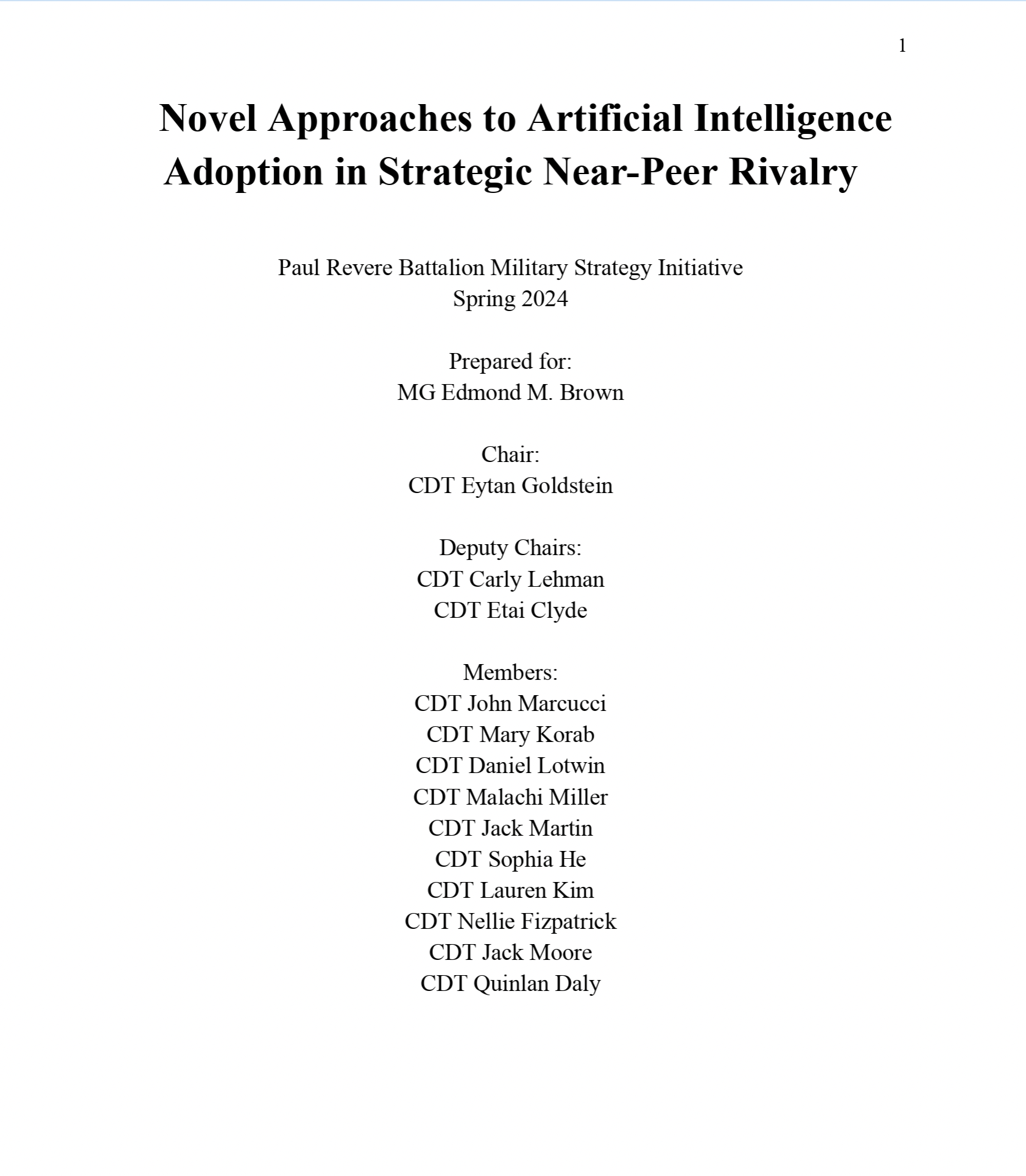
Spring 2024 - Novel Approaches to Artificial Intelligence Adoption in Strategic Near-Peer Rivalry
China is rapidly advancing in artificial intelligence through state-driven efforts and military integration, posing a major strategic challenge to the United States. The paper argues that the U.S. Army must improve its ability to adopt emerging AI technologies, including tools like large language models, to enhance operations. It concludes that strengthening partnerships, education, and integration of AI with existing cyber and intelligence capabilities is key to maintaining a competitive edge.
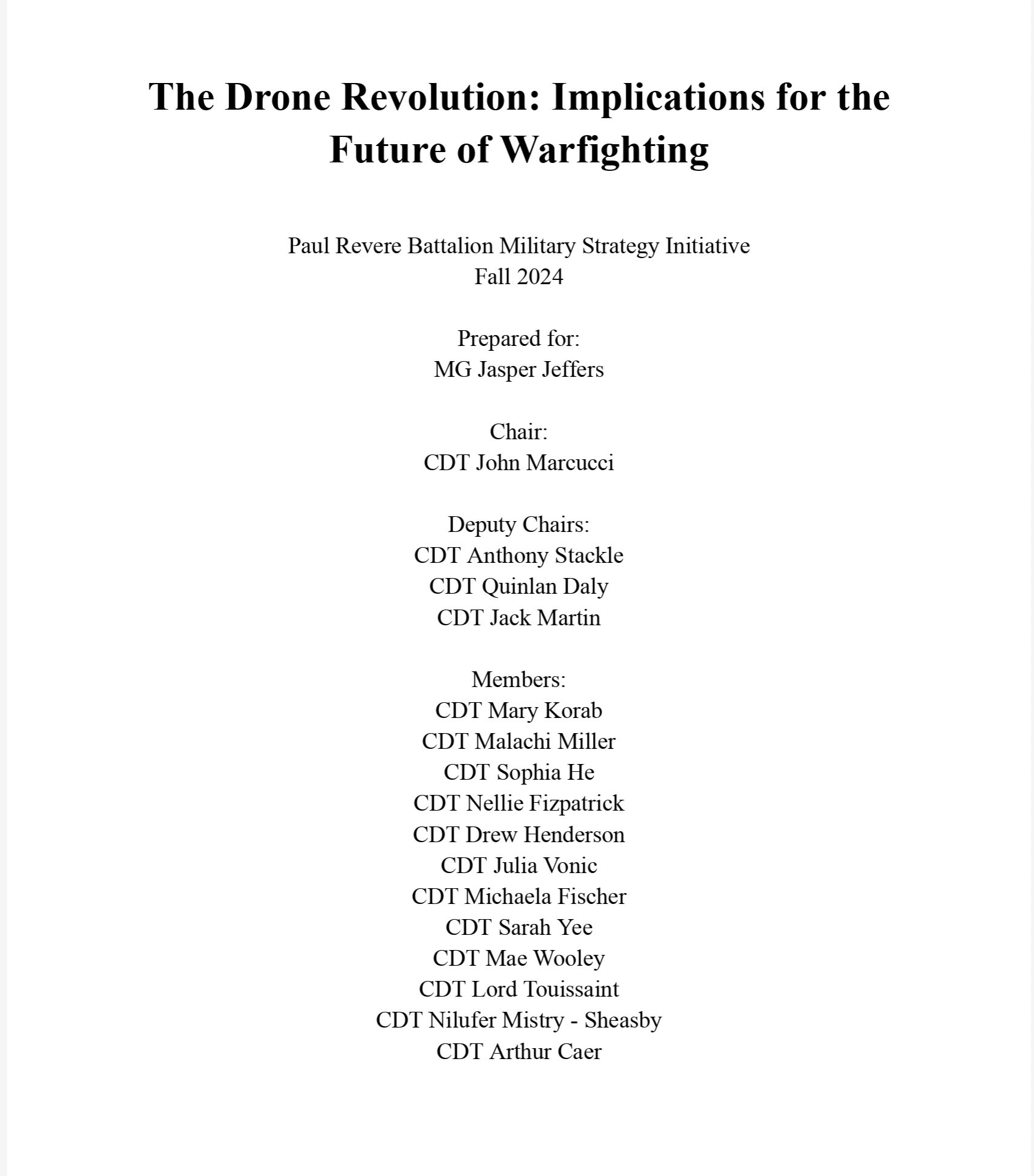
Fall 2024- The Drone Revolution: Implications for the Future of Warfighting
The paper argues that drone warfare, especially when combined with AI, is transforming modern conflict, as seen in Ukraine and the Middle East, where low-cost drones can rival traditional military power. It highlights major U.S. challenges, including reliance on Chinese supply chains, slow acquisition processes, cyber vulnerabilities, and gaps in training and integration.
To stay competitive, the authors recommend improving data integration, investing in AI, edge computing, and talent, and expanding swarm and autonomous drone capabilities. They also emphasize developing stronger defenses (like encryption and anti-drone systems) and leveraging drones beyond combat, including logistics, healthcare, and communications.
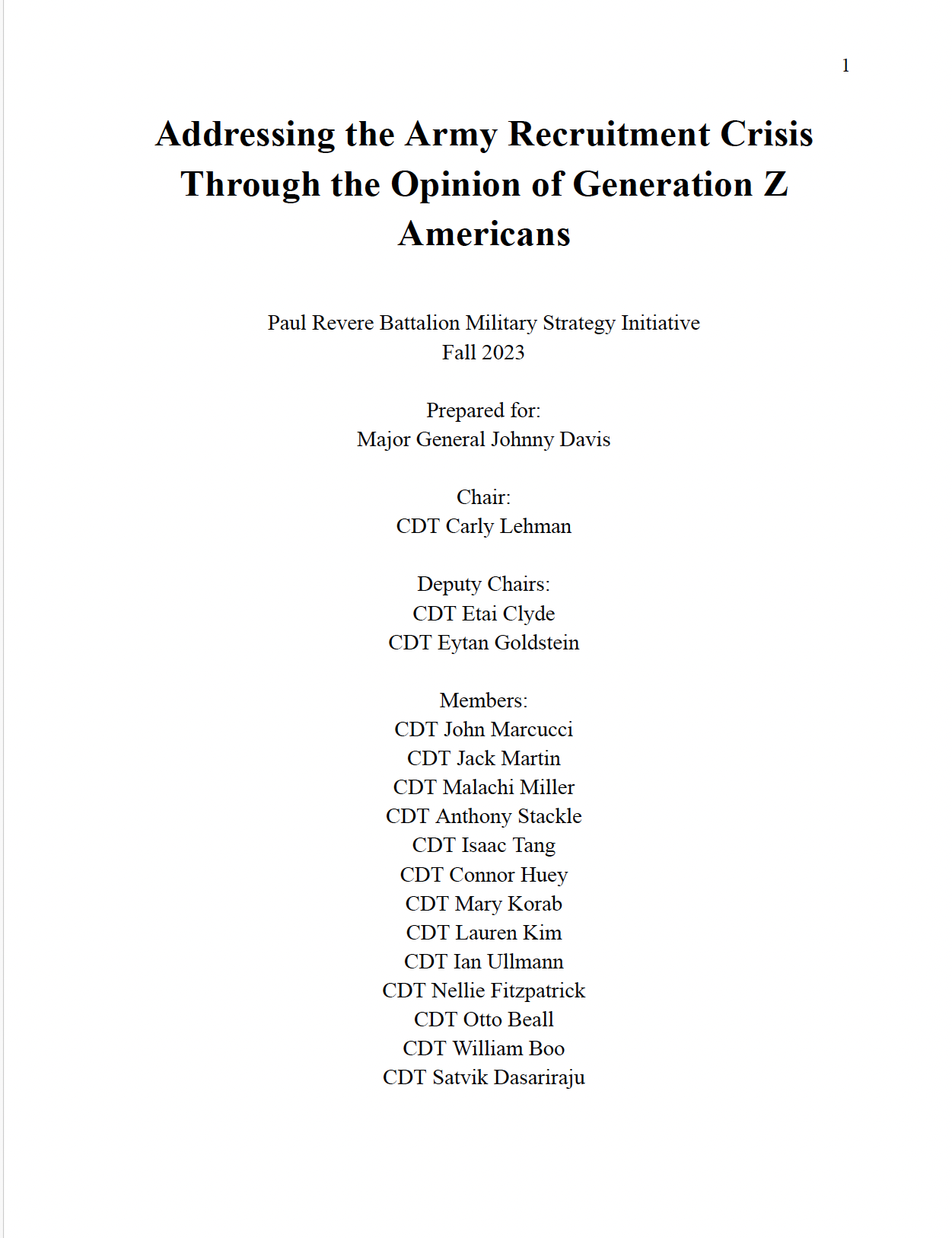
Fall 2023- Addressing the Army Recruitment Crisis Through the Opinion of Generation Z Americans
The paper argues that the U.S. Army’s recruiting crisis is driven less by economic factors and more by cultural and social shifts within Generation Z, including misperceptions about military life, declining trust, and a widening civil-military divide.
It finds that while Gen Z values (like teamwork and purpose) align with Army values, issues such as safety concerns, lack of awareness of benefits, and reduced exposure to veterans are major barriers to enlistment.
The authors recommend modernizing recruitment through social media influencers, stronger veteran engagement, career pathway programs, and better messaging tailored to Gen Z priorities to improve both perception and enlistment rates.
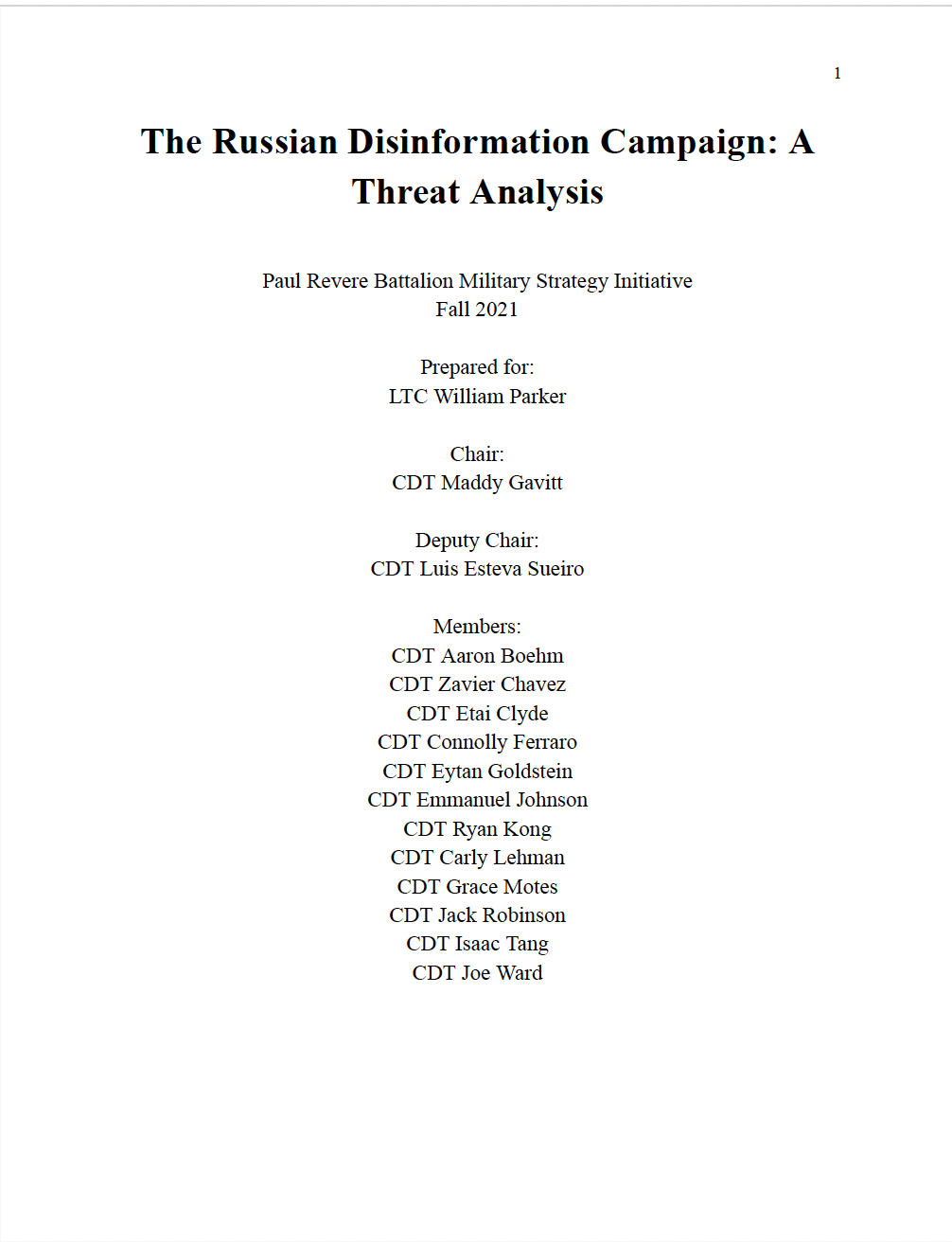
Fall 2021- The Russian Disinformation Campaign: A Threat Analysis
The paper argues that the U.S. military must modernize its logistics and sustainment systems to keep pace with evolving, technology-driven warfare and remain competitive against near-peer adversaries.
It highlights key challenges such as outdated infrastructure, supply chain vulnerabilities, and limited integration of emerging technologies like AI and automation.
To address this, the authors recommend investing in digital transformation, strengthening supply chain resilience, and leveraging advanced technologies to improve efficiency, readiness, and operational flexibility.